Find the vehicle’s tire-pressure reference before comparing the dashboard display
A digital pressure display can be convenient, but the ownership question begins with the correct reference for the actual vehicle. Before choosing a car, locate its pressure placard and relevant manual information. Distinguish that recommendation from the maximum printed on a tire’s sidewall and from a display’s current reading.
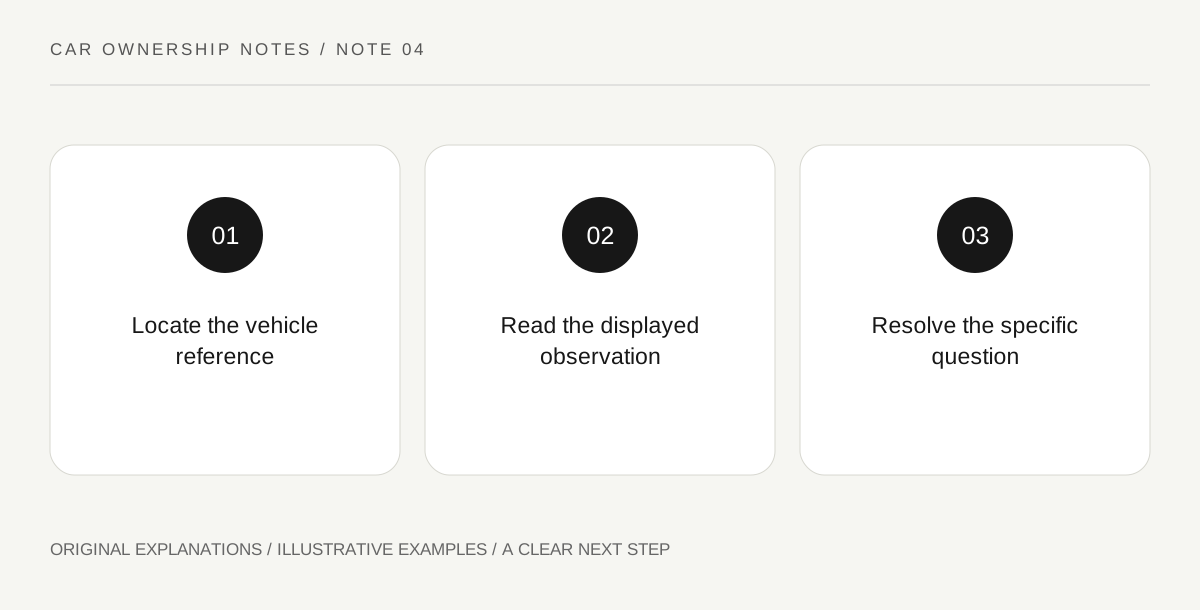
Original explanatory diagram. Read the full method and limitations below.
Locate the reference while stationary
NHTSA explains that the manufacturer’s recommended inflation pressure is found on the vehicle placard and in the owner’s manual, rather than the tire-sidewall maximum. Ask the seller to show the reference for the actual car while it is safely parked. Record where it is and which conditions the manual specifies. This is a documentation exercise, not an instruction to adjust tires at the dealership or use a generic value copied from another vehicle.
Keep recommendation and observation in separate fields
A recommended value, a measured value and a dashboard warning are different pieces of information. Put each in a separate worksheet field if you discuss the feature. A demonstration of a screen tells you how information is presented; it does not by itself establish correct maintenance or the absence of tire problems. If a warning or concerning condition appears, ask the qualified provider to address it rather than dismissing it because a salesperson calls the display sensitive.
Ask about the user task
Learn how the actual manual tells an owner to find and interpret the information, including the conditions for a valid check. Do not borrow a reset procedure or pressure value from a similar model. A convenient interface can be worth noting, but it should support the correct task rather than replace it. Ask yourself whether the reference and display are understandable to the people who will share the car, and record any unresolved question for the proper service provider.
Keep the buying conclusion modest
This feature check can tell you whether the ownership information is clear and whether a specific concern needs resolution before handoff. It cannot certify the tire set, predict future failures or establish that an entire vehicle is mechanically sound. Keep those assessments with qualified inspection and service. A useful selection notebook makes the reference easy to find later without turning a short stationary demonstration into a comprehensive safety test.
An illustrative ownership comparison
Imagine an unfamiliar dashboard showing pressure values beside each wheel. A buyer locates the actual vehicle placard and asks a qualified provider to explain the manual’s checking conditions. They record reference location and display behavior separately instead of treating the sidewall maximum as the target. This invented demonstration contains no recommended pressure, adjustment instruction or assessment of a particular tire’s condition.
Questions that come up
Is the pressure molded into the sidewall the vehicle’s recommended target?
NHTSA distinguishes that maximum from the vehicle manufacturer’s recommendation. Use the actual placard and manual rather than transferring the sidewall number into a maintenance target.
Does a normal-looking dashboard establish tire condition?
No. A display is limited information. It does not replace the appropriate checks or qualified assessment of wear, damage, age and other tire concerns.
References and scope
These sources support the factual background. Examples and exercises are original illustrative teaching material. References do not imply endorsement.
- NHTSA — summer driving preparation — Vehicle placard pressure differs from the tire-sidewall maximum; check the actual vehicle instructions.