Tires & handoff items3 min read
A neat cargo floor does not tell you what happens after a tire problem. Before choosing a vehicle, identify whether the actual car includes a spare, a temporary repair kit or another documented support arrangement. The useful comparison concerns equipment and limitations, rather than an assumption that every car carries the same solution.
Read the guide ↗
Tires & handoff items3 min read
A second key can look like a small detail until it becomes a separate ownership task. Before buying, count the working keys actually supplied and ask what a complete authorized replacement would involve. Compare the whole task, including applicable programming and labor, rather than a generic online fob price.
Read the guide ↗
Tires & handoff items3 min read
A wheel option can change the tire replacement question as well as the car’s appearance. Before selecting it, build a comparable basket for the actual approved tire specification. The exercise is about making the ownership question visible, not claiming that one wheel diameter is always cheaper or better.
Read the guide ↗
Tires & handoff items3 min read
A digital pressure display can be convenient, but the ownership question begins with the correct reference for the actual vehicle. Before choosing a car, locate its pressure placard and relevant manual information. Distinguish that recommendation from the maximum printed on a tire’s sidewall and from a display’s current reading.
Read the guide ↗
Tires & handoff items3 min read
Low mileage can make a used car attractive without explaining the age of its tires. Before choosing it, ask a tire professional to help identify the set’s manufacturing information and assess its condition. Keep age and visible tread as different questions instead of treating unused-looking rubber as a complete answer.
Read the guide ↗
Coverage documents3 min read
A warranty described as several years of protection can sound simpler than its actual terms. Before comparing vehicles, identify the start point, calendar limit and mileage limit for each relevant coverage. The ownership question is what remains for this particular car, rather than how impressive the original headline sounds.
Read the guide ↗
Coverage documents3 min read
A separately sold service contract may overlap an existing warranty instead of adding the protection you imagine. Put the actual periods and covered categories side by side before deciding. This makes the word extended a question to investigate, rather than a conclusion about how much useful coverage has been added.
Read the guide ↗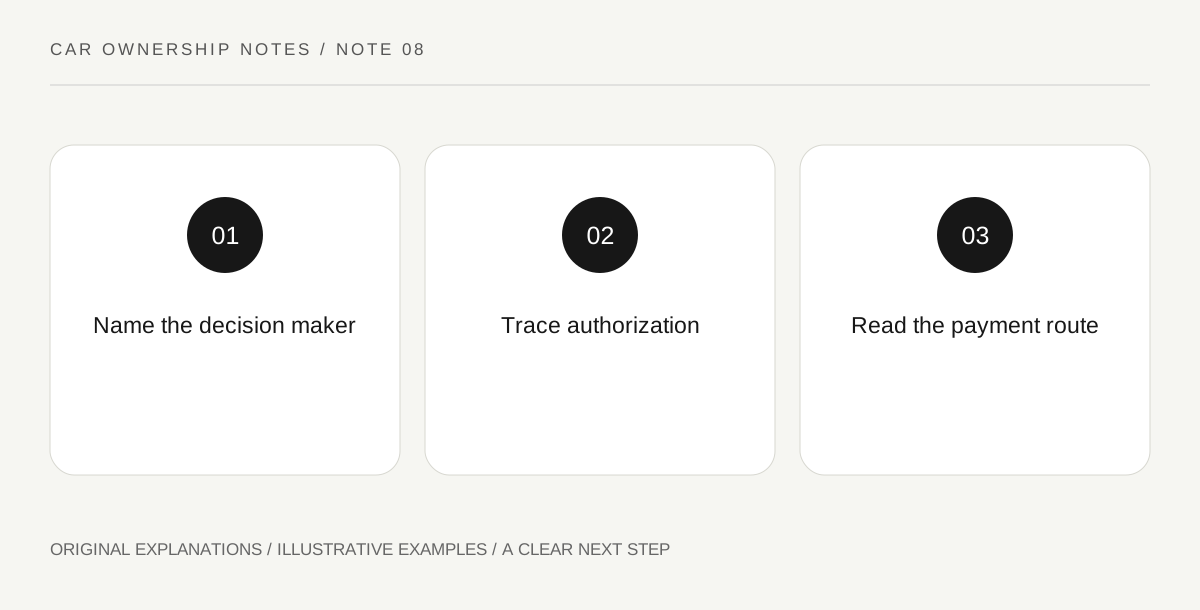
Coverage documents3 min read
A list of covered parts does not explain how a repair request becomes an authorized payment. Before buying an optional service contract, trace its actual claim route. Identify who decides, what must happen before work begins and which costs may remain your responsibility, using the written terms rather than an imagined easy reimbursement.
Read the guide ↗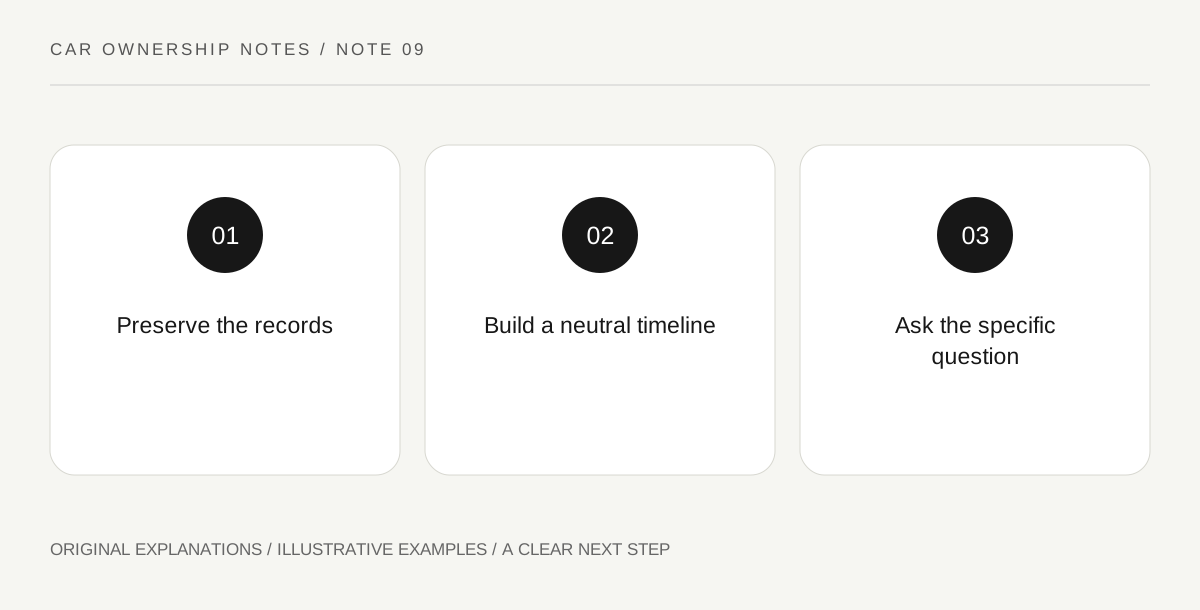
Service & support3 min read
Maintenance records become more useful when their meaning can be followed. Before choosing a used car, ask what records are available and organize them by date, mileage and documented task. A readable file can expose a question to ask without pretending that paperwork proves the vehicle’s complete mechanical condition.
Read the guide ↗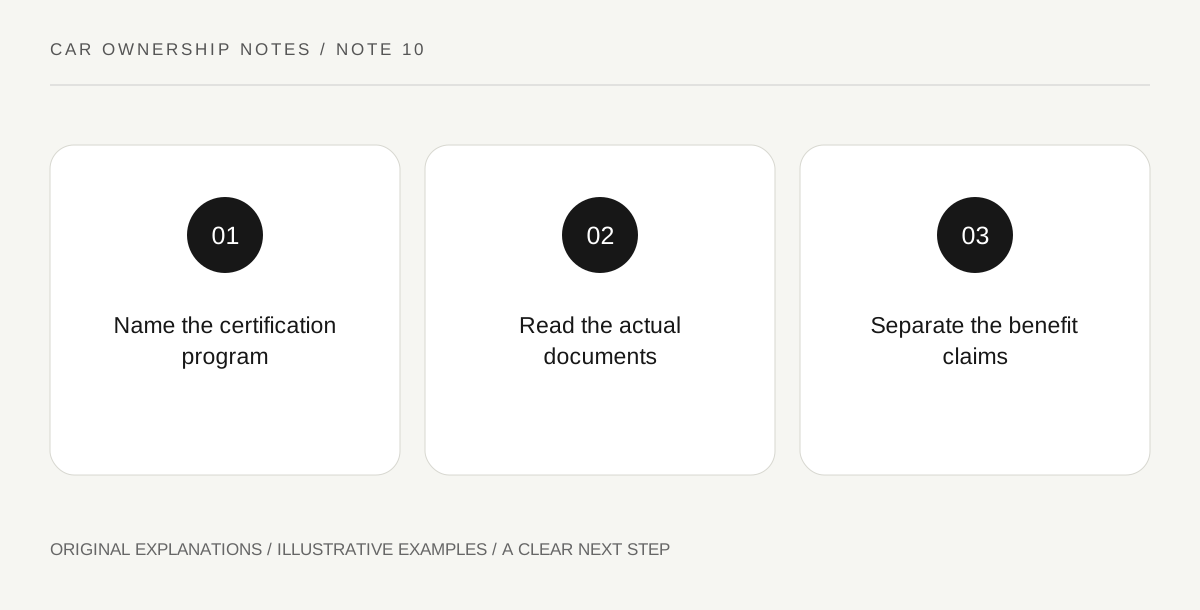
Coverage documents3 min read
Certified is an attractive word in a used-car listing, but the ownership question concerns the actual program and written terms. Before choosing the car, identify who makes the certification claim and which document describes any resulting coverage. An adjective cannot do the work of a named, applicable arrangement.
Read the guide ↗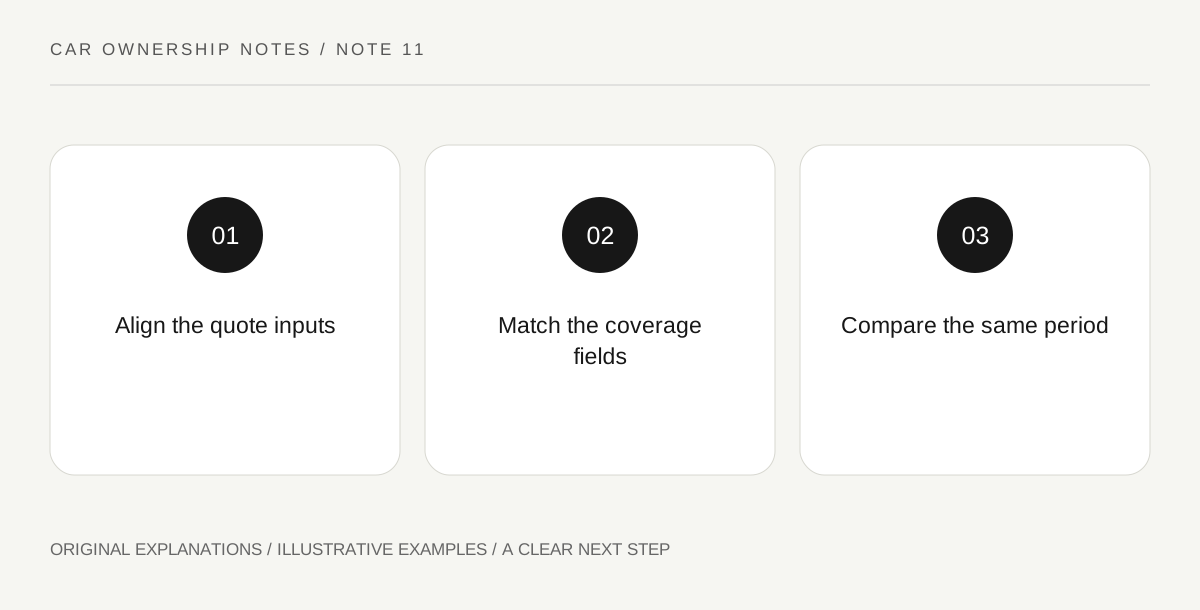
Coverage documents3 min read
A lower insurance quote can reflect a different comparison rather than a better price for the same protection. Before using insurance cost to choose between cars, align the fields that define the quote. The exercise is to make the comparison readable, not to select coverage limits or a policy for someone else.
Read the guide ↗
Service & support3 min read
The inconvenience of a repair is not limited to the repair invoice. Before choosing a car and related coverage, ask what happens to your transport while it is unavailable. Keep a dealer courtesy vehicle, a paid rental and policy reimbursement separate, so that a friendly promise does not become an assumed guaranteed replacement car.
Read the guide ↗
Coverage documents3 min read
Vehicle value and the amount still owed are different numbers. Before considering a GAP product, write them separately and ask a qualified provider what the actual offered terms address. The distinction makes the conversation clearer without assuming that a policy, debt-cancellation product or lender requirement works the same way in every case.
Read the guide ↗
Service & support3 min read
An electric-car comparison can become misleading when less maintenance is shortened to no maintenance. Before choosing, ask for the actual vehicle’s schedule and local service arrangements. Keep an all-electric car distinct from a hybrid, then compare the tasks that remain instead of filling a budget with an invented zero.
Read the guide ↗
Coverage documents3 min read
A battery-warranty headline does not tell you how every future change in battery behavior will be treated. Before choosing an EV, read the actual coverage and ask which events, measures and processes it addresses. Keep warranty wording separate from an informal estimate of how the car seems to perform today.
Read the guide ↗
Connected ownership3 min read
A navigation screen can display information supplied by the phone or by the car’s own system. Before choosing a vehicle, identify which experience you actually want and how the exact setup supports it. A clear stationary demonstration is more useful than assuming every screen with maps offers the same connection.
Read the guide ↗
Connected ownership3 min read
A feature working during a demonstration may depend on a trial or a separately paid service. Before choosing the car, identify the actual continuing arrangement and its dates. That makes the ownership comparison reflect what you expect to keep using, rather than treating every demonstrated screen as permanently included equipment.
Read the guide ↗
Connected ownership3 min read
A car’s software-update process can involve more than a notice on a screen. Before choosing a connected vehicle, ask which updates can require downtime and how the actual owner is informed. Keep the question specific to the model and market instead of assuming a phone-style update experience applies universally.
Read the guide ↗
Connected ownership3 min read
Changing vehicles can leave personal data and remote-service links behind if the handoff stops at emptying the glove box. Before the transaction, make a manufacturer-guided plan for the old car’s stored information, connected accounts and subscriptions. Keep those tasks separate so that a single reset is not mistaken for complete account separation.
Read the guide ↗
Service & support3 min read
An owner manual is most useful when it applies to the car in front of you. Before choosing, identify the correct model year, market and relevant equipment context, then save the official reference. A familiar model name can otherwise lead to an attractive explanation of a feature that this particular vehicle does not have.
Read the guide ↗