Compare wheel options with a like-for-like tire-replacement basket
A wheel option can change the tire replacement question as well as the car’s appearance. Before selecting it, build a comparable basket for the actual approved tire specification. The exercise is about making the ownership question visible, not claiming that one wheel diameter is always cheaper or better.
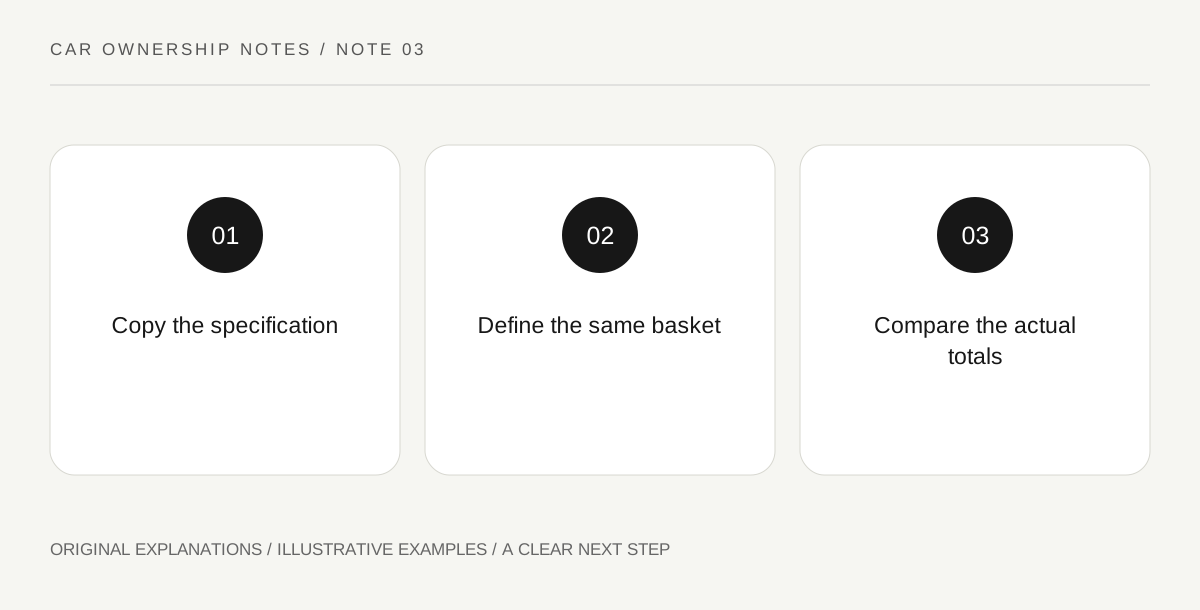
Original explanatory diagram. Read the full method and limitations below.
Copy the actual specification
NHTSA’s TireWise material explains tire-size and specification information and points owners to the vehicle’s recommended requirements. Record the specification applicable to each exact configuration being compared. Do not infer it from wheel appearance or a photograph. If the vehicle uses different front and rear requirements, keep those positions distinct. Ask a qualified tire professional to explain the actual compatible choices rather than treating a broad product-search result as an approved substitute.
Define the same service basket
Ask providers to identify what their quote includes: the correctly specified tires, installation services, applicable disposal charges and any other required part of the task. Keep the scope consistent between configurations and providers. A bare tire price and an installed total answer different questions. You can use a worksheet without deciding immediately where to buy. The purpose is to stop a visually small trim choice from hiding an ownership cost that has never been described on the same basis.
Use hypothetical numbers only as arithmetic
For illustration, suppose one complete quoted basket were eight hundred units and another eleven hundred. The difference would be three hundred units for that assumed basket. Those fictional values establish no market price, replacement frequency or lifetime saving. Do not multiply the difference across an invented number of future sets and present it as a guaranteed result. The useful calculation is simple and transparent once the actual quotes and assumptions are supplied.
Keep performance preferences separate
A person may still prefer a particular configuration for reasons beyond the replacement basket. Record those reasons honestly and use reliable specification or professional information for technical claims. Do not turn the cost worksheet into an unsupported verdict about handling, comfort or safety. The final comparison should show the selected configuration, the compatible service question and the importance you personally assign to the difference. Unavailable quotes remain open questions rather than opportunities to fill the table with guessed numbers.
An illustrative ownership comparison
Imagine a buyer comparing two fictional factory wheel options. They request complete like-for-like replacement baskets for each approved specification and discover that an initial online comparison mixed bare prices with installed totals. They rebuild the worksheet before deciding how much the appearance preference matters. This invented exercise supplies no actual tire price, technical endorsement or prediction about replacement timing.
Questions that come up
Does a larger wheel always produce a higher replacement cost?
This guide makes no universal claim. Obtain comparable quotes for the actual approved specifications and included services instead of inferring the result from diameter alone.
Can a cheaper tire with a similar size replace the specified one?
Do not assume that. Compatibility includes the actual vehicle requirements. Ask a qualified tire professional and use the manufacturer’s information rather than substituting from appearance or a partial label match.
References and scope
These sources support the factual background. Examples and exercises are original illustrative teaching material. References do not imply endorsement.
- NHTSA — TireWise — Tire specifications, aging, identification and professional inspection context.