Before comparing car-insurance quotes, make the coverage fields equal
A lower insurance quote can reflect a different comparison rather than a better price for the same protection. Before using insurance cost to choose between cars, align the fields that define the quote. The exercise is to make the comparison readable, not to select coverage limits or a policy for someone else.
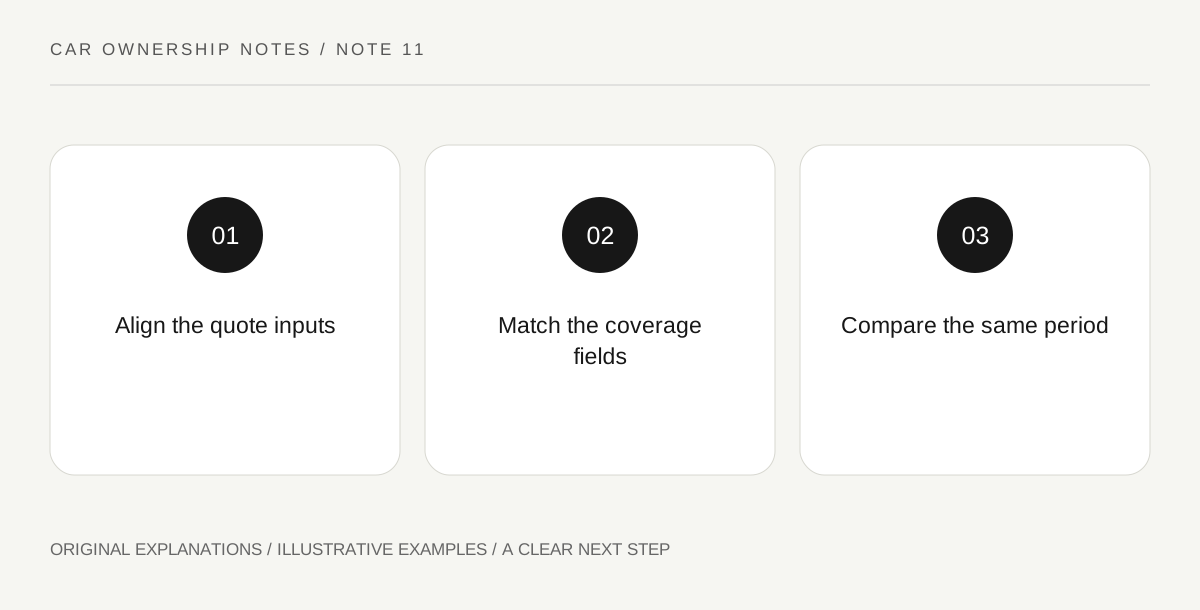
Original explanatory diagram. Read the full method and limitations below.
Write a shared quote brief
NAIC’s shopping tool separates coverage, deductibles and premium periods. Use a consistent factual brief for legitimate providers and keep the actual vehicle identity correct for each quote. Record which facts change between the cars and which remain fixed. Do not improve a number by silently changing drivers, expected use or other information requested by the provider. A fair comparison begins with accurate inputs and a record of what each provider was actually asked to price.
Match the coverage rows
Put the quoted coverages, limits and deductibles into corresponding rows. Mark an absent item as absent rather than entering zero as though it were equivalent protection. Ask the licensed provider to explain unfamiliar terms under the relevant jurisdiction and circumstances. This article does not recommend a deductible or limit. Its purpose is to stop a premium number from being compared before you understand what the offered policy actually describes and which fields differ.
Keep the payment period visible
A monthly number, a six-month premium and an annual figure cannot be compared simply by placing them in the same column. Retain the period and any payment-plan charges described in the actual quote. If performing an illustrative conversion, label the assumptions and do not imply it creates an annual price guarantee. Ask the provider about the quote’s validity and effective date. A saved estimate should not become a claim about the price available whenever you eventually buy the vehicle.
Use the comparison for a precise follow-up
When the table shows a difference, identify whether it comes from the vehicle, coverage, payment arrangement or another stated factor. Ask a narrow clarification rather than demanding that every provider match a headline number. Keep individualized coverage decisions with a licensed professional who can address your circumstances. The ownership notebook should preserve the actual quotes and unresolved differences, making the car-selection discussion more informed without pretending to replace insurance advice.
An illustrative ownership comparison
Imagine two fictional quotes, one with a lower displayed premium but a different deductible and an omitted optional item. A buyer aligns the fields and asks for clarification before attributing the entire difference to the cars. This invented worksheet example includes no real price, coverage recommendation, underwriting judgment or promise that a particular quote will remain available.
Questions that come up
Does the lowest displayed premium prove the best like-for-like price?
No. First establish whether the quoted protection and payment basis match. Different fields can produce different numbers, and suitability still depends on individual circumstances and professional guidance.
Does this worksheet choose the right deductible?
No. It organizes what was quoted. Discuss suitable limits, deductibles and requirements with a licensed provider rather than treating an illustrative comparison as personalized insurance advice.
References and scope
These sources support the factual background. Examples and exercises are original illustrative teaching material. References do not imply endorsement.
- NAIC — automobile insurance shopping tool — Comparable quote fields for deductibles, coverage and premium periods.