Read a car warranty with both its calendar and mileage limits
A warranty described as several years of protection can sound simpler than its actual terms. Before comparing vehicles, identify the start point, calendar limit and mileage limit for each relevant coverage. The ownership question is what remains for this particular car, rather than how impressive the original headline sounds.
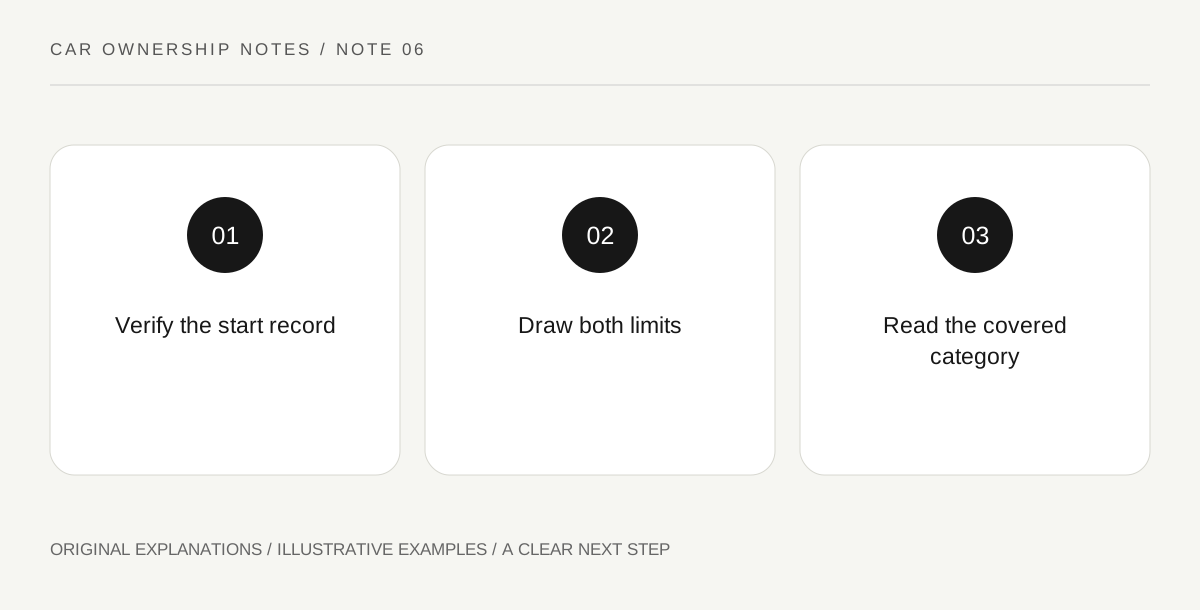
Original explanatory diagram. Read the full method and limitations below.
Find the actual start point
The FTC explains that manufacturer coverage commonly uses months or miles, whichever comes first. Obtain the actual warranty document and written information about its applicable start point. Do not assume a used vehicle’s purchase date restarts an original manufacturer period. A general brochure about a new model and a statement about this car’s remaining coverage answer different questions. Keep the actual record beside the document so that the comparison does not depend on a remembered advertisement.
Draw two separate limits
Use two lines in the notebook: one for the calendar boundary and one for the mileage boundary. Add the current date and odometer information as observations, clearly dated. This makes it easier to see why the period that remains can be shorter than a casual year count suggests. Do not collapse the two into a single imagined expiry date without the actual terms. Other conditions or exclusions still need their own reading; the two-line diagram is an organizing aid, not a complete coverage determination.
Separate different warranty categories
The vehicle may have different documents or periods for different components. List the actual categories relevant to the car rather than assuming a powertrain description covers every electrical, trim or wear item. Ask the manufacturer or authorized provider to explain ambiguous wording in writing. Keep a question unresolved when the document does not support an answer. A salesperson’s broad assurance that the car is still under warranty should not replace the specific category that matters to your ownership concern.
Use the remainder to ask a better question
Once the applicable limits are understood, consider whether the documented remaining coverage affects your selection. It is one part of the ownership picture, not a promise that no expense will arise during that period. Preserve the actual exclusions and required process beside the dates. If a comparison still lacks a verified start record, do not fill the gap with an optimistic assumption. The value of the exercise is making the basis of the coverage statement reviewable.
An illustrative ownership comparison
For illustration, imagine a warranty with a fictional four-year or forty-thousand-mile boundary. One car reaches the mileage boundary while calendar time remains; another has lower mileage but reaches the calendar boundary first. The two-line notes make that difference visible. These invented figures describe no real warranty and establish no entitlement; the actual document and vehicle record govern any real comparison.
Questions that come up
Does buying a used car automatically restart manufacturer coverage?
Do not assume so. Ask for the actual vehicle’s remaining-coverage record and applicable terms. The purchase of a used vehicle and the original warranty start can be different events.
Does an unexpired period mean every repair is covered?
No. The covered item, cause, exclusions and required process matter. A date-and-mileage note helps organize the question but cannot replace reading the actual warranty.
References and scope
These sources support the factual background. Examples and exercises are original illustrative teaching material. References do not imply endorsement.
- FTC — auto warranties and service contracts — Warranty and separately purchased service-contract distinctions, coverage periods, administrators and maintenance records.