Before choosing a service contract, trace one hypothetical claim through its process
A list of covered parts does not explain how a repair request becomes an authorized payment. Before buying an optional service contract, trace its actual claim route. Identify who decides, what must happen before work begins and which costs may remain your responsibility, using the written terms rather than an imagined easy reimbursement.
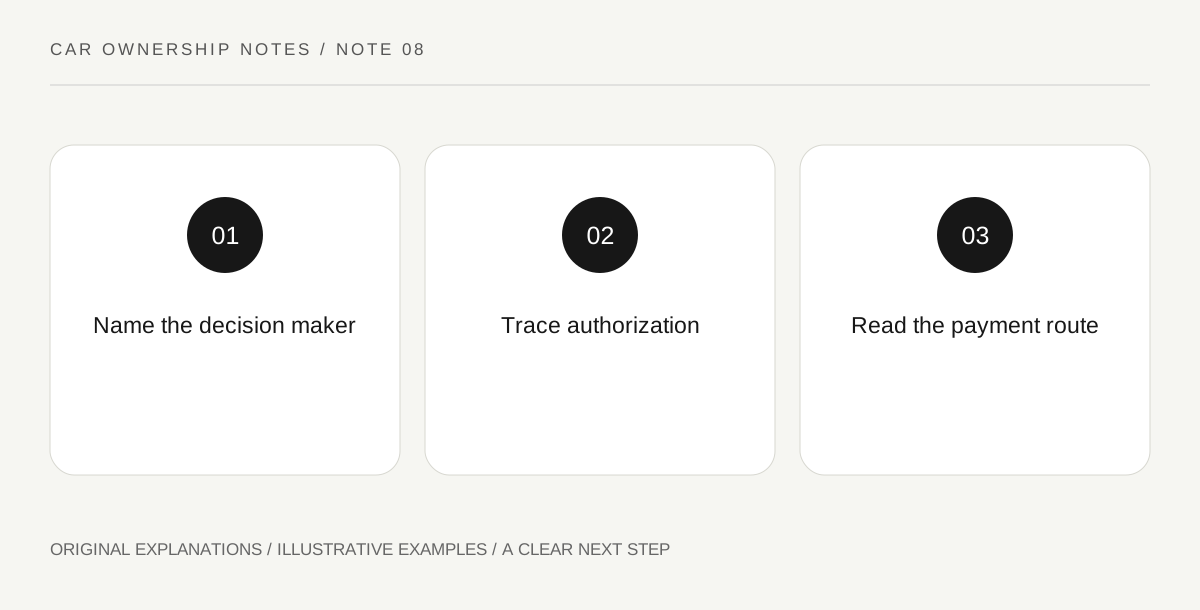
Original explanatory diagram. Read the full method and limitations below.
Identify the responsible decision maker
The FTC notes that service contracts can involve an administrator handling coverage decisions. Find the actual provider and administrator named in the offered document, together with the legitimate contact route. A dealership selling the product may not be the organization deciding a later claim. Record the roles separately. This is a practical reading task, not a judgment that one organizational arrangement is inherently better than another or a prediction about how a future dispute will end.
Trace the authorization step
Choose a hypothetical covered-category problem and read what the contract says must happen before diagnosis or repair is authorized. Do not arrange unnecessary work to test the process. The exercise is on paper: who contacts whom, which information is requested and what written confirmation is described? Keep any preapproval requirement visible. A general statement that repairs are covered cannot answer whether a particular unapproved action would meet the actual terms.
Separate payment from reimbursement
Read whether the contract describes direct payment, owner reimbursement or another specified arrangement. Ask which amounts, documentation and timing conditions apply under the offered text. Do not supply a universal deadline or assume every repair facility participates. If the vehicle may be serviced away from the selling location, identify the relevant geographic or provider restriction in the actual document. A benefit that sounds convenient locally may require a different process in another place.
Keep the unresolved point specific
If the claim route is unclear, write a narrow question with the relevant provision and ask the legitimate provider for an explanation. Save the answer with the complete offered terms. Avoid treating a hypothetical exercise as an approved future claim: the actual fault, eligibility and circumstances will still matter. The buying decision is whether you understand the product you are considering, not whether a paper scenario can guarantee a later payment.
An illustrative ownership comparison
In an illustrative contract review, a buyer traces a fictional repair from the service facility to an administrator and then to the stated payment arrangement. The document requires an authorization step that was absent from the sales summary, so the buyer asks for clarification before deciding. This invented sequence makes no claim about a real administrator, coverage determination, reimbursement time or dispute outcome.
Questions that come up
Does a seller’s reassurance approve a future claim?
No. Use the actual contract process and authorized decision maker. A future claim depends on its facts and the terms; this reading exercise cannot preapprove it.
Should I carry out a repair just to test the process?
No. Trace the hypothetical route on paper and ask legitimate provider questions. Actual diagnosis and repairs belong with qualified professionals and the applicable authorization procedure.
References and scope
These sources support the factual background. Examples and exercises are original illustrative teaching material. References do not imply endorsement.
- FTC — auto warranties and service contracts — Warranty and separately purchased service-contract distinctions, coverage periods, administrators and maintenance records.