Map a service contract beside the existing warranty before judging its extra value
A separately sold service contract may overlap an existing warranty instead of adding the protection you imagine. Put the actual periods and covered categories side by side before deciding. This makes the word extended a question to investigate, rather than a conclusion about how much useful coverage has been added.
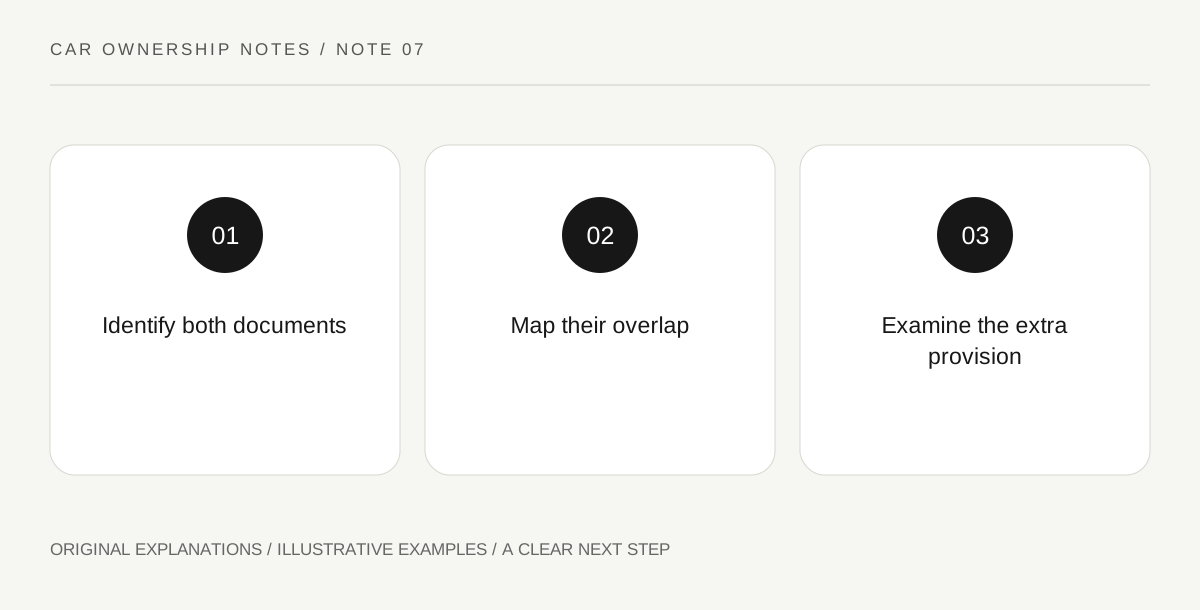
Original explanatory diagram. Read the full method and limitations below.
Name the two documents correctly
The FTC distinguishes an included auto warranty from an optional service contract purchased separately. Label the documents by what they are, including the responsible provider. Do not let a sales nickname replace the actual contract title. A clear heading helps you avoid counting the same protection twice in the ownership comparison. Keep the complete offered text rather than relying only on a brochure or a screen showing a monthly amount.
Draw the overlap explicitly
Create a simple timeline for the existing warranty and another for the proposed contract, using their actual applicable starts and ends. Mark where periods coincide. Then compare the relevant covered categories and exclusions within those periods. Coinciding dates do not prove identical coverage, and different dates do not prove the later contract covers what you need. The map simply shows where a detailed question belongs and prevents an attractive extra year count from concealing an overlapping first period.
Ask what changes for a specific ownership concern
Choose one concrete category that matters to you and ask how the documents treat it. Keep the answer tied to the written provisions rather than an invented promise that major repairs are covered. Consider any applicable deductible, limits and service-location requirement as part of that specific question. If the provider cannot identify the relevant terms clearly, leave the claimed benefit unconfirmed. A vague reassurance is difficult to compare with another car’s actual documented arrangement.
Make the optional decision separate
Do not let the effort already spent choosing a vehicle make the additional contract feel automatic. Read the offered terms and any applicable cancellation or transfer information before deciding under your circumstances. This guide does not determine whether a particular product is worthwhile or recommend buying one. It gives you a way to distinguish additional documented value from duplicated wording, with the total offered cost and unresolved questions still visible.
An illustrative ownership comparison
Imagine an optional fictional contract beginning on the same date as an existing coverage period. A buyer draws the timelines and asks which specific category gains different protection during the overlap and afterward. They do not count the full contract length as entirely extra time. This invented example provides no real coverage, price, cancellation right or recommendation; it demonstrates the comparison structure.
Questions that come up
Does overlap automatically make a contract useless?
No. Different categories or terms may matter. The map identifies a question for the actual documents; it does not decide value without reading what the proposed contract adds and costs.
Is a brochure enough to compare the protection?
No. Use the offered contract and applicable warranty terms. Promotional language can introduce the product, but the actual provisions are needed to understand the specific claimed benefit.
References and scope
These sources support the factual background. Examples and exercises are original illustrative teaching material. References do not imply endorsement.
- FTC — auto warranties and service contracts — Warranty and separately purchased service-contract distinctions, coverage periods, administrators and maintenance records.